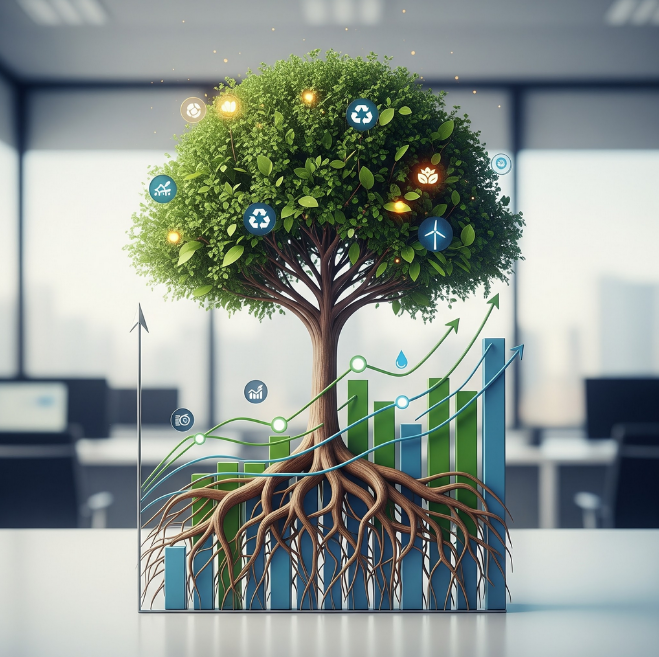
Economic development and environmental sustainability are not mutually exclusive because the goals of economic development are distinct. Human development is a key source of economic and environmental development. As there are contradictory principles of equity and free from exploitation among other arguments, the principle of economic development is not found relevant today.
There are many economic development models and theories. Each theory explains its own wisdom, and theories advocate explanations to the economic development process. No single theory is universal, as the application is not uniform. Structural change theory explains the transformation that has optimised economies of agriculture to the industrial and service sectors. This sectoral shift aims to achieve higher economic growth through the reallocation of surplus labour from the agricultural sector to the industrial and service sectors, resulting in higher productivity of economic growth. The technology also causes a shift from the agriculture sector to the industry sector and the service sector. Lewis’s two-sector model and Chenery’s patterns of development. There are several criticisms, including urban bias, increased inequality, and capital intensity. Arthur Lewis developed this model in 1954, and Hollis Chenery identified these models in developing countries. The Bretton Woods system established an international economic model promoting free trade and fixed exchange rates. Trump’s tariff war has denied this purpose, and the BRICS model aims to promote a local economic model. Regionalism and multilateralism are constant economic development models. Wai Whiteman Rostow proposed the five stages of economic growth model in 1960, known as ‘The Stages of Economic Growth: A Non-Communist Manifesto”. This is another school of revivalism of capitalism, when Socialism has emerged successfully in developing economies.
The economic growth models revolve around free market economy and controlled market economy, and these are evolving through the Adam Smith model.
The Sustainable Development model began in the 1980s, but it was recognised in the 1987 Brundtland Report.
The Sustainability Growth model is a New Growth Paradigm. The 21st century is defined by a paradox. Humanity has achieved higher levels of material wealth, technological advancement, and global interconnectedness. This economic model is fundamentally a system of economic growth leading to sustainability. There are challenges which include climate change threatening ecological stability, widening social inequality, fraying community fabrics, and resource depletion, casting a shadow over future economic prosperity. The traditional growth model relies on the narrow lens of Gross Domestic Product (GDP). This model, while effective in mobilising capital and driving production, is silent on the depletion of natural capital, the erosion of social cohesion, and the equitable distribution of its benefits. The pursuit of infinite growth on a finite planet is a logical and ecological impossibility.
The Sustainability Growth Model is an integrated framework for development to achieve economic prosperity within the ecological limits of the planet, and to strengthen the social foundations of society. It is supported by three pillars that include Economic Viability, Environmental Sustainability, and Social Equity.
-
The Biosphere (Base Layer):
This foundational layer supports all life and includes the "Planet" SDGs:
- SDG 6: Clean Water and Sanitation
- SDG 13: Climate Action
- SDG 14: Life Below Water
- SDG 15: Life on Land
-
Society (Middle Layer):
This layer rests upon the biosphere and includes the "People" SDGs:
- SDG 1: No Poverty
- SDG 2: Zero Hunger
- SDG 3: Good Health and Well-being
- SDG 4: Quality Education
- SDG 5: Gender Equality
- SDG 7: Affordable and Clean Energy
- SDG 11: Sustainable Cities and Communities
- SDG 16: Peace, Justice, and Strong Institutions
-
Economy (Top Layer):
This layer represents the "Prosperity" SDGs, which operate within the bounds of society and the biosphere:
- SDG 8: Decent Work and Economic Growth
- SDG 9: Industry, Innovation and Infrastructure
- SDG 10: Reduced Inequalities
- SDG 12: Responsible Consumption and Production
-
Partnerships (Pinnacle):
SDG 17 sits at the very top, signifying its cross-cutting role in achieving all other goals.